

AI SEO vs. traditional SEO: track your ChatGPT and Perplexity visibility — and fix it
AI answers are becoming a second search results page. Here's how AI SEO differs from classic SEO, how to measure whether ChatGPT and Perplexity mention you, and how to close the gaps.
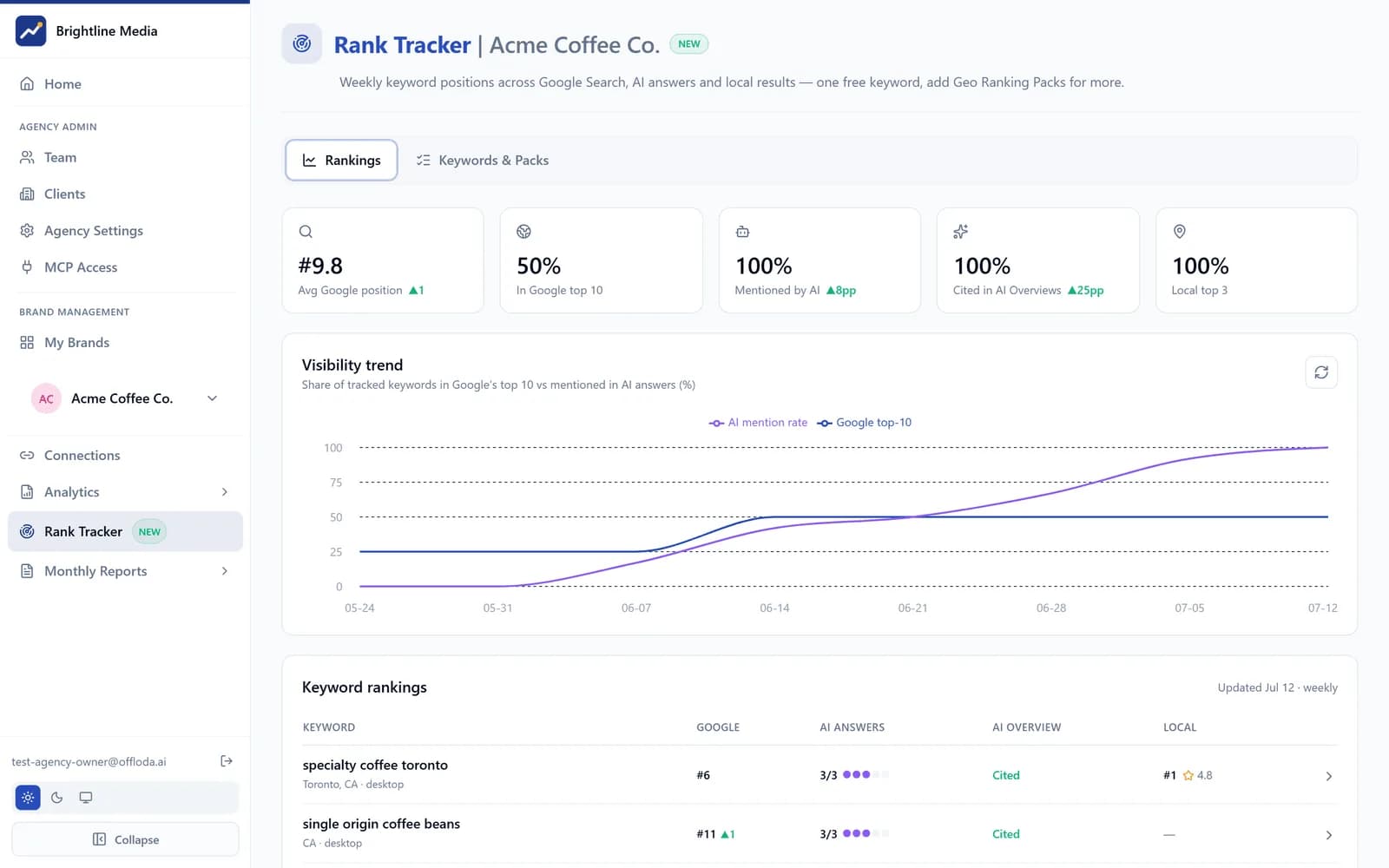
A growing share of your customers' questions never reach a results page. They're answered in ChatGPT, Perplexity, Gemini, and in the AI Overviews sitting on top of Google itself. For anyone responsible for a brand's organic visibility, that creates a second scoreboard — and most teams aren't looking at it yet. This is what AI SEO (sometimes called GEO — generative engine optimization) actually changes, what it doesn't, and how to run it like an operation instead of a curiosity.
The second results page
Classic SEO has one deliverable: positions on a results page. AI search replaces the page with an answer — a few sentences, a handful of cited sources, sometimes a short list of recommended providers. If your brand is in the answer, you exist; if it isn't, there is no page two. Ranking #3 on Google while being absent from ChatGPT's answer for the same query is now a real and measurable gap — and no classic rank tracker will show it to you.
What actually changes
- The scoreboard. Instead of a position, you're measuring presence: is the brand mentioned in the answer, is your domain cited as a source, and how early?
- The unit of competition. AI answers reason about entities — brands, products, places — not just pages. Being described consistently across the web matters more than any single URL.
- The volatility. Answers shift week to week as models and their retrieval change. A one-time audit is stale in a month; this is a tracking discipline, not a project.
What doesn't change
Almost everything that earns AI citations is classic SEO done well. The engines cite pages that answer questions directly, carry clean structure and schema, load fast, and come from domains with real authority. Your Search Console data, your content quality, your internal linking — all of it still compounds. AI SEO isn't a replacement discipline; it's the same inputs read against a second scoreboard.
That's why treating SEO and AI search as two separate products is a mistake. They run on the same sensor data — which is exactly how Offloda's search layer is built: Search Console, analytics, keyword research and AI-answer tracking feeding one prioritized queue of actions.
How to measure AI visibility
- Pick the queries that matter. Your money queries plus the branded ones — the set you already watch in classic rank tracking.
- Track mentions and citations separately. Being named in the answer and being linked as a source are different wins; watch both, weekly.
- Include AI Overviews. Google's own AI layer can absorb clicks from queries you still rank #1 for — track whether it appears and whom it cites.
- Go local where it matters. For location businesses, check the answers per city — AI answers differ by market, and so do the gaps.
Closing the gap, with your approval
Measurement without a fix loop is just a slower way to feel bad. When visibility drops on a query, the response is usually concrete: refresh the page that used to earn the citation, add the FAQ or schema the answer engines lean on, fix the internal links that signal what the page is about. In Offloda, that loop is operational — the sensor flags the drop, the fix is proposed from the same data, and it deploys behind your approval like every other write. Tracking tells you that you dropped; the operations layer is what fixes it.
A Monday-morning checklist
- 1. Which tracked queries lost an AI mention or citation this week?
- 2. Did an AI Overview appear on any query where we rank top-3 — and does it cite us?
- 3. Which competitor shows up in answers we're absent from?
- 4. Which flagged pages have a proposed fix waiting for approval?
- 5. Did last week's approved fixes move the needle?
If those five questions take you more than five minutes, the tracking isn't operational yet. See how the search layer works or book a demo — bring the queries you care about and we'll look at both scoreboards live.
Put your marketing data to work.
Connect every channel once, white-label the output, and let AI act on live data across all your brands.
See pricing